Fluid Compute

In the fast-evolving world of web development, efficiency and scalability are crucial. While dedicated servers provide always-on availability, they often lead to over-provisioning, scaling challenges, and operational overhead. Serverless computing improves this with auto-scaling and pay-as-you-go pricing, but it can suffer from cold starts and inefficient use of idle time. A new, balanced approach has emerged—Fluid Compute.
What is Fluid Compute
Fluid Compute is a new model for web application infrastructure that evolves beyond traditional serverless computing. Instead of relying on single-invocation functions, it introduces high-performance mini-servers that provide greater efficiency and cost-effectiveness.
At its core, Fluid Compute embraces a set of principles designed to optimize both performance and cost while meeting the demands of today’s dynamic web applications
Compute triggers only when needed
Real-time scaling from zero to peak traffic
Existing resources are used before scaling new ones
Billing based on actual compute usage, minimizing waste
Pre-warmed instances reduce latency and prevent cold starts
Supports advanced tasks like streaming and post-response processing
All with zero configuration and zero maintenance overhead
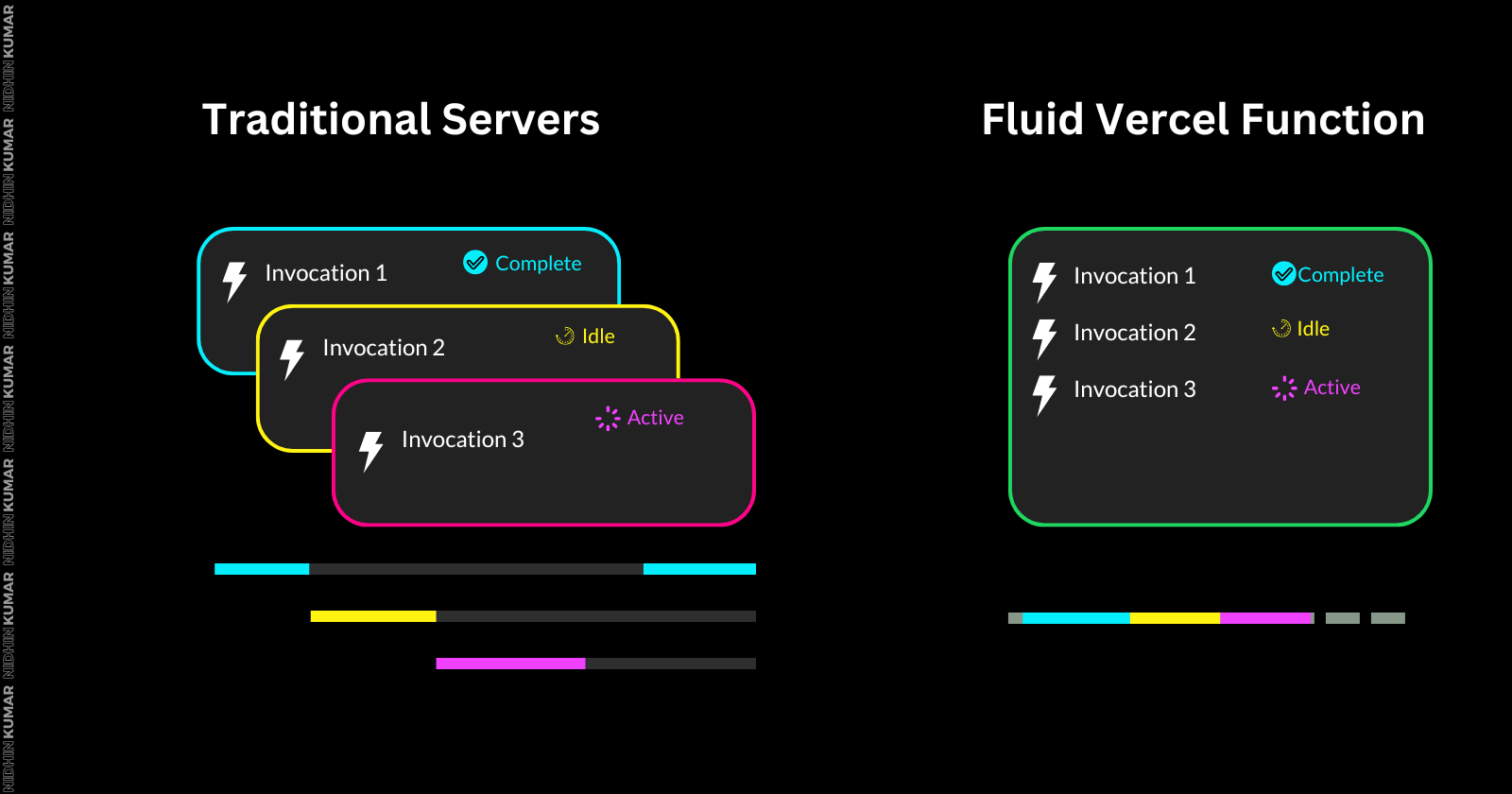
How Vercel Functions Leverage Fluid Compute
Vercel Functions provide a seamless way to deploy backend logic without managing servers manually. These serverless functions dynamically scale with demand, ensuring high performance while reducing infrastructure concerns. By integrating Fluid Compute principles, Vercel Functions further optimize performance and cost efficiency.
Scalability and Performance Optimization
Vercel Functions dynamically adjust to workload demands, scaling up or down as needed. By leveraging Fluid Compute principles, they minimize cold starts, make efficient use of idle resources, and optimize overall performance.
Edge Computing for Reduced Latency
Traditional server architectures often result in latency issues due to centralized data centers. Vercel Functions use Fluid Compute’s pre-warmed instances and a global edge network to execute functions closer to users. This reduces response times, enhances performance, and provides a smoother user experience.
Why Developers Should try Fluid Compute with Vercel
Fluid Compute transforms serverless computing into a more efficient and powerful model, offering
Cost efficiency: Pay only for actual compute usage, reducing waste.
Better performance: Pre-warmed instances minimize latency and cold starts.
Greater scalability: Real-time scaling ensures seamless traffic handling.
Zero maintenance overhead: No need for complex backend management.
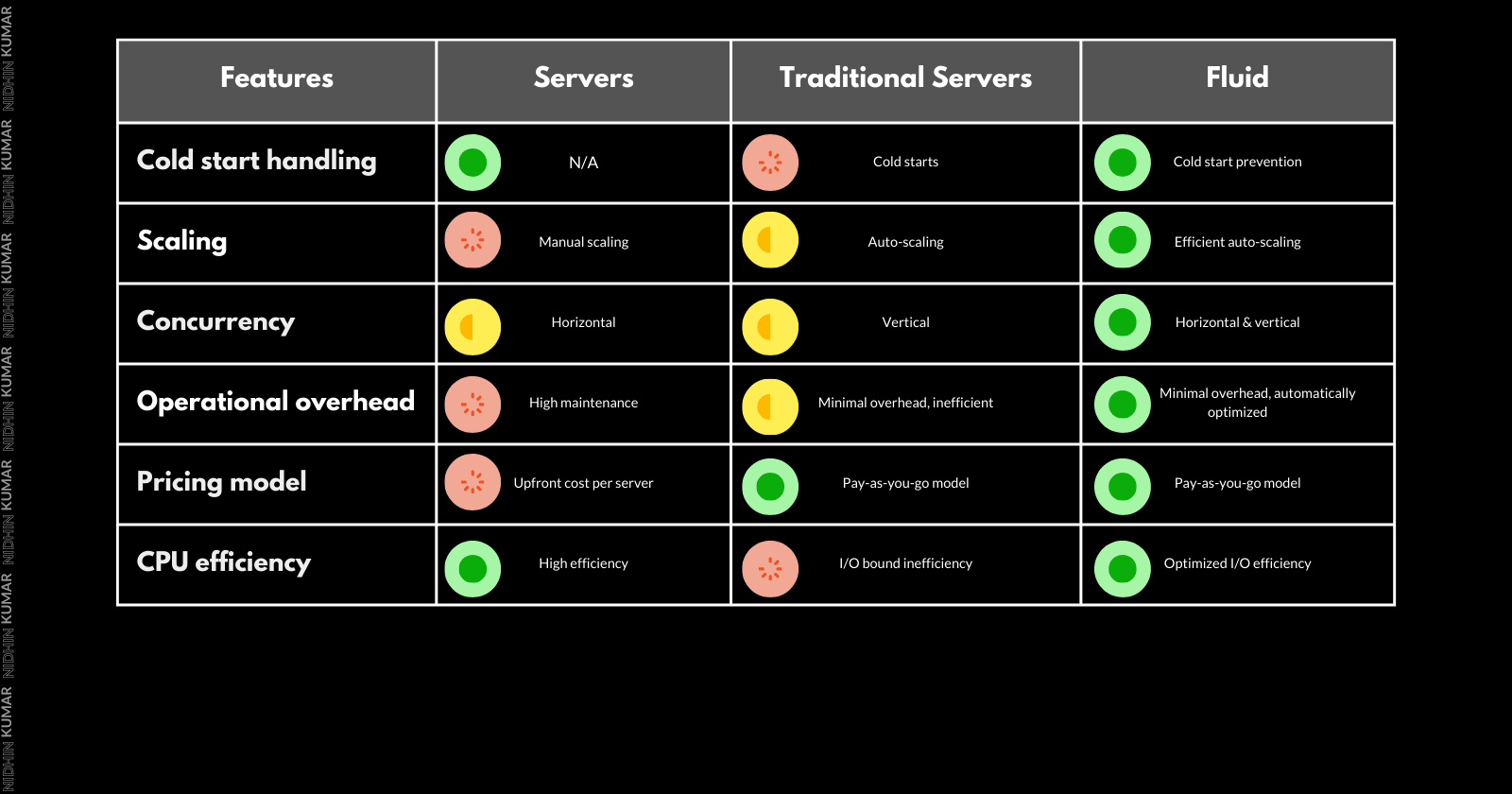
With serverless computing evolving, Fluid Compute with Vercel Functions presents a next-generation solution for building scalable, cost-effective, and high-performing web applications. Whether you're developing a small project or a large-scale enterprise application, this approach maximizes efficiency while reducing operational complexity.
Explore more about Fluid from Vercel: https://vercel.com/fluid
Comments
Join the discussionNo comments yet. Be the first to comment.